
Namecheap Market Auctions Explained: Fees, Proxy Bids & Strategy
New to Namecheap Market? Here's exactly how its domain auctions work in 2026 — proxy bidding, anti-snipe extensions, the 10% premium, subscriptions, and how to evaluate a domain before you bid.
 Mark FultonJun 16, 12:00 AM UTC10 min read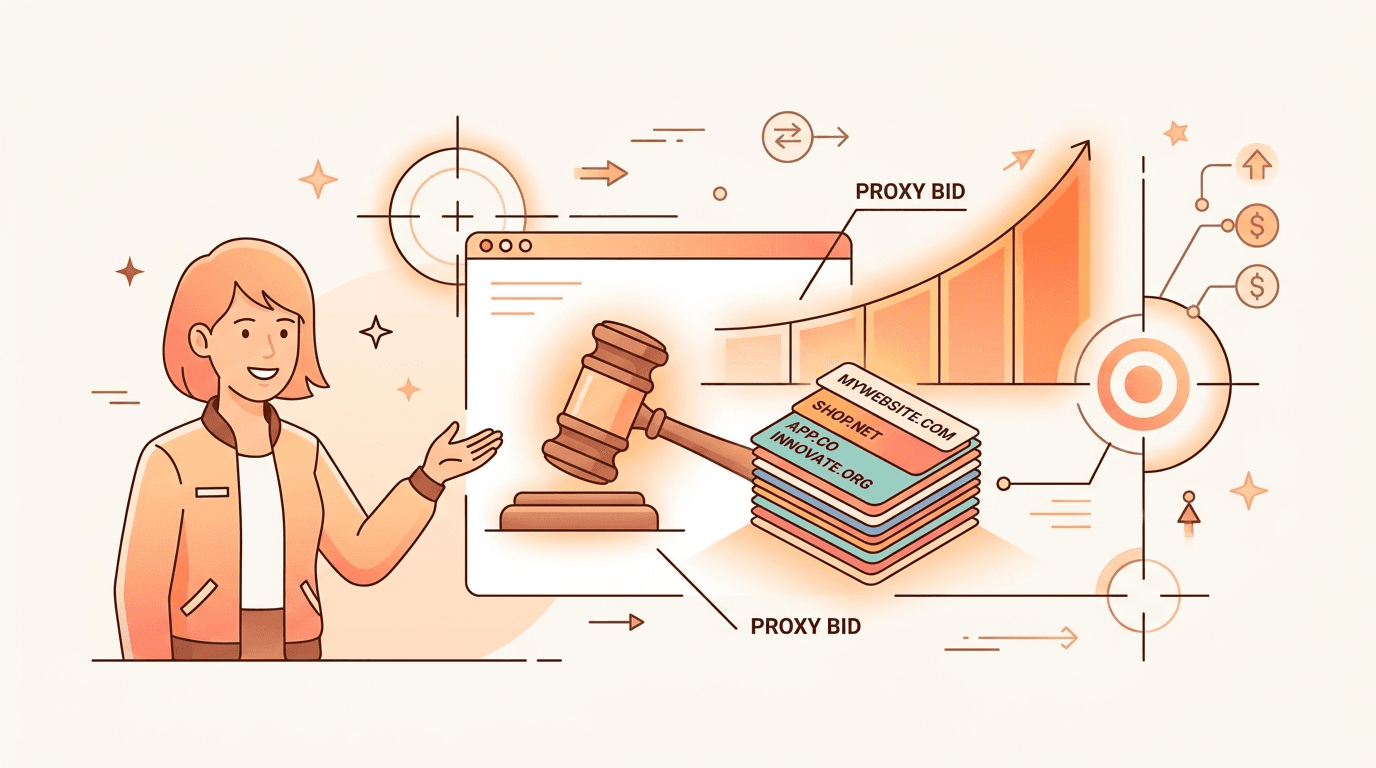
Namecheap Market is Namecheap’s domain aftermarket, where expired and listed domains sell through timed auctions. You bid with a proxy system up to a maximum, the day’s auctions are scheduled to close together at 11:00 AM ET (a late bid can extend one past that), and winners pay a 10% buyer’s premium. If you’re new to it, this guide covers everything you need before your first bid.
What is Namecheap Market?
Namecheap Market is the company’s built-in aftermarket — a place to buy and sell domains that are already registered or expiring. A large share of inventory is expired-domain auctions: names whose owners didn’t renew, now available to the highest bidder. You browse, bid, and if you win, the domain transfers into your account. Weighing it against the other big aftermarket? See Namecheap vs GoDaddy Auctions.
Getting started: subscription & balance
To bid you need a Market subscription (around $5/year) and typically a minimum account balance. The balance requirement exists so only serious, funded bidders participate — it cuts down on people winning and then failing to pay. Budget for the subscription and keep enough balance to cover the bids you intend to make.
How proxy bidding works
Namecheap uses proxy (automatic) bidding. You enter the maximum you’re willing to pay, and the system bids on your behalf in the smallest increments needed to keep you in the lead — up to your maximum. Crucially, you don’t pay your full max; you pay one increment above the next-highest bidder. If someone outbids your maximum, you’re notified and can choose to raise it. For the full mechanics — increment tiers and the non-round-number edge — see Namecheap Proxy Bidding Explained.
When auctions close: the 11:00 AM ET batch & anti-snipe
Auctions run for several days, but the day’s expiring and marketplace auctions are scheduled to close together in a single batch at 11:00 AM ET. To stop last-second sniping, a late bid near the close can extend that one auction past the bell (an anti-snipe rule), so a hotly contested name can run a little long. The practical takeaway: don’t rely on timing — rely on setting the right maximum. We cover the tactics in How to Snipe Namecheap Domain Auctions.
One more wrinkle worth knowing: closeouts. When an expired auction ends with no bids, Namecheap can re-list it as a closeout that auto-extends 24 hours at a reduced $5 minimum, stepping down on each no-bid day — a cheap lane for names nobody else chased.
Fees you need to know
- 10% buyer’s premium on the winning bid, added to your total.
- Registration/transfer cost for the domain itself.
- Subscription (~$5/year) to participate.
Always add the premium when you decide a maximum — a $200 win is really ~$220+ before registration. For the full all-in math with a worked example, see Namecheap Market Fees Explained.
What happens after you win?
Winning is not the end of the process, and the gap between the two trips up most first-time bidders. Payment comes off your Market balance, the name lands in your Namecheap account, and you become the registrant of record. From that moment a 60-day clock starts: under ICANN’s Transfer Policy, a domain that has just changed registrant can be locked against transfer to another registrar for 60 days. Plan around it. If you bought a name intending to move it somewhere else immediately, you cannot.
It also pays to understand where the inventory comes from. Expired names reach auction through a sequence the registry controls, and the previous owner keeps a right to pull the name back for a while. ICANN’s Expired Registration Recovery Policy requires registrars to offer a redemption window after expiry, which is why a name you were tracking can vanish from the auction list without ever reaching a close. That is normal, not a glitch. For the wider map of how these venues fit together, see what the domain aftermarket actually is.
Can you sell your own domains here?
Yes, and it is the half of Namecheap Market most guides skip. Alongside the expired-domain auctions you can list names you already own, either at a fixed Buy It Now price or as a timed auction. Selling carries its own commission rather than the buyer’s premium, so the economics look nothing like the buy side and need their own arithmetic before you list. The mechanics, pricing choices and the listing steps are covered in how to list a domain on Namecheap Market.
How to evaluate a domain before bidding
The names worth owning usually share a few traits:
- Brandable and easy to say — short, pronounceable, memorable.
- Clean history — no spam, penalties, or trademark issues (check the Wayback Machine).
- Real demand signals — backlinks, traffic, or strong comparable sales on NameBio.
- The right extension —
.comstill leads for resale liquidity.
Is there a Namecheap auctions API?
There is, and it is the reason automating this is practical rather than a scraping project. Namecheap publishes an Auctions API that lets an external application read live auction data and place bids against your own account. You enable API access from your account settings, and calls are tied to your credentials, so anything built on it acts as you rather than as a third party holding your funds. That distinction matters when you are choosing a tool.
Doing it at scale
Browsing Namecheap Market by hand works for a few domains, but serious investors monitor continuously and act fast. Tools that connect to the official Auctions API can scan for your criteria, score domains with AI, and place proxy bids automatically — turning a manual grind into a set-and-forget system. That’s the idea behind a Namecheap Marketplace domain sniper app.
Frequently asked questions
What is the Namecheap Market?
It's Namecheap's aftermarket — where domains that already belong to someone, or are expiring out of another owner's account, are bought and sold rather than hand-registered fresh. Most of the inventory is expiring names auctioned before they fully drop, plus names listed directly by sellers. You browse and bid through your own Namecheap account, so you keep control of your funds and your bids the whole way through.
How do Namecheap Market auctions work?
An expiring or listed domain opens for bidding for several days, and the daily batch closes together at 11:00 AM ET. Bidding is proxy-based — you set a maximum and the system bids the minimum needed to keep you ahead — and a bid in the final five minutes pushes the close out by five minutes (anti-snipe), so a contested name can run past the batch time. Win, and you pay your bid plus a 10% buyer's premium and the first-year registration.
Are Namecheap Market domains worth buying?
Some are genuine bargains and most aren't — the value is entirely in the screening. Because names are priced by an open auction rather than a fixed sticker, an undervalued domain nobody else spots can go for a fraction of its resale value, while a hyped one gets bid past what it's worth. Evaluate each name on brandability, TLD, length, and history before you settle on a maximum, and treat the auction price as the market's opinion, not proof of value.
Can you sell your own domains on Namecheap Market?
Yes. Alongside the expired-domain auctions you can list names you already own, either at a fixed Buy It Now price or as a timed auction that runs like any other. The costs work differently on this side: sellers pay a commission on the sale rather than the 10% buyer's premium, so the arithmetic you use to price a listing is not the arithmetic you use to set a maximum bid. Work out your floor before you list, because a timed auction with no reserve can close anywhere.
Can you transfer a domain away right after winning it?
Usually not straight away. Under ICANN's Transfer Policy a domain whose registrant has just changed can be locked against a registrar transfer for 60 days, and an auction win is a registrant change. The name is yours and you can use it, point it, or list it for sale immediately, but moving it to a different registrar generally has to wait out that window. If your plan depended on consolidating a win somewhere else the same week, build the delay into it.
Mark Fulton
Developer & Founder of PounceDomains · 20+ year domain investor
Mark Fulton is a 20+ year domain investor and the developer and founder of PounceDomains. He has spent two decades buying, building, and flipping domain names, and built PounceDomains himself to automate the hunt for undervalued domains on the Namecheap aftermarket.
Keep reading
Domain Sniping Tool: How Automated Auction Bidding Works
What a domain sniping tool actually does in 2026: discovery, AI scoring, and proxy bidding on Namecheap Market - and why last-second sniping is dead.
How to Snipe Namecheap Domain Auctions: A 2026 Playbook
A step-by-step playbook for winning Namecheap Market auctions in 2026 — the 11:00 AM ET batch close, proxy bidding, anti-snipe extensions, max-bid tactics, fees, and how to automate the hunt.
Snipe these domains automatically
PounceDomains watches Namecheap Market 24/7, scores every ending-soon domain with AI, and bids on the winners. Free to start.
Start sniping free