
Sedo Alternative: Read the Commission Ladder First
A 20-year investor on Sedo alternatives in 2026: the 10/15/20% commission ladder, the minimum-fee trap on Category II TLDs, and when leaving actually pays.
 Mark FultonSep 2, 12:00 AM UTC10 min read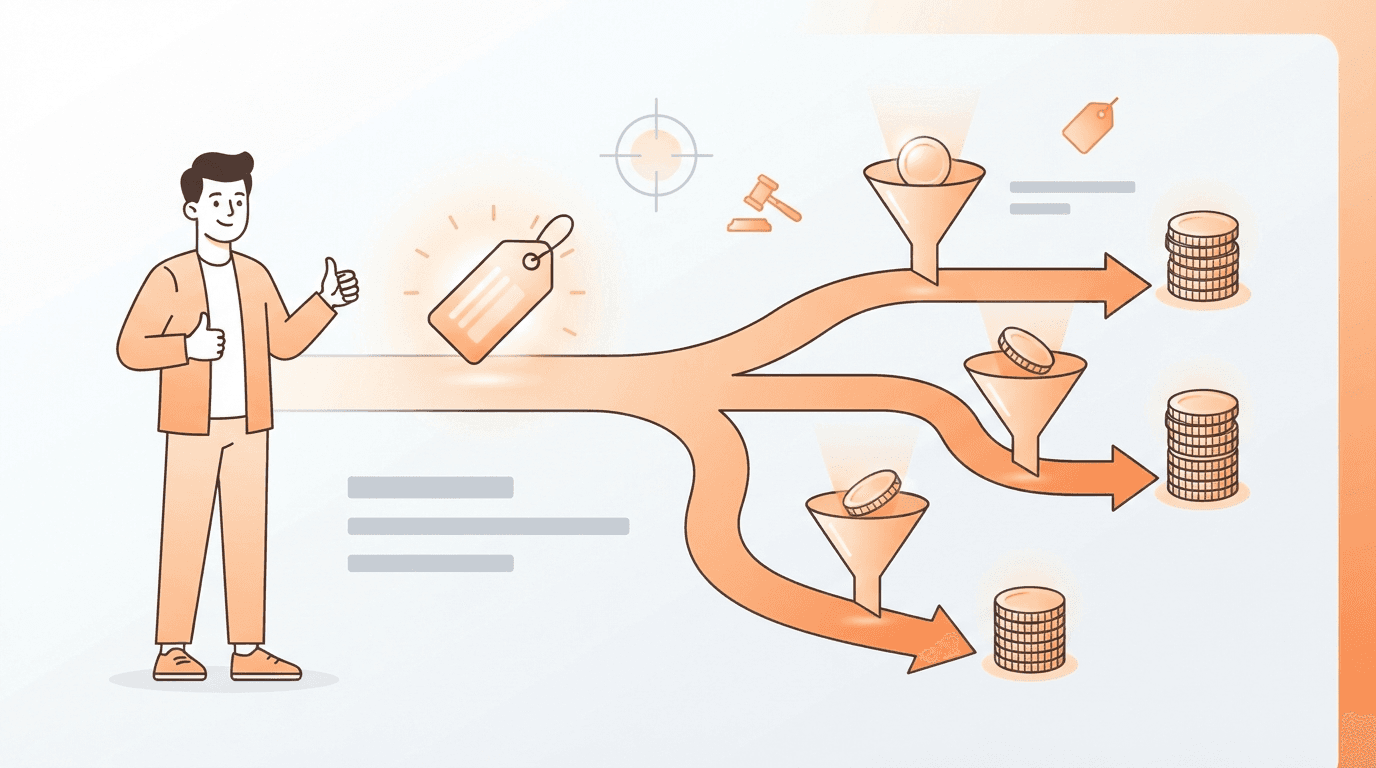
Most people searching for a Sedo alternative do not have a Sedo problem. They have a routing problem. Sedo charges three different marketplace commissions on the identical sale, 10%, 15% or 20%, decided entirely by how the buyer reached your listing, and a separate minimum fee that can swallow eighty percent of a small sale on the wrong extension. Before you move a portfolio, work out which rate you have actually been paying and why, because in a good share of cases the fix is a listing setting rather than a different venue. When leaving genuinely is the answer, the right replacement depends on which of Sedo’s four separate products you were using. I have been listing, selling and transferring names for twenty years, and the commission you get quoted is almost never the commission you end up paying.
This is the fair version rather than the competitive one. Sedo has been operating since 1999, its buyer base is genuinely international instead of US-centric, and it publishes the weekly sales data a good part of this industry quietly depends on. Those are real things. So is the fee structure, and the fee structure is where nearly every complaint about the platform actually originates.
What does Sedo actually do?
Four separate businesses share one login, which is why generic alternative lists are useless here. The first is a marketplace: you list a name, buyers browse or make offers, Sedo takes a cut when it sells. The second is SedoMLS, a distribution network that pushes your listing into registrar search results and partner storefronts, reaching buyers who never visit Sedo at all. The third is parking, which monetizes traffic on names nobody has bought yet. The fourth is a brokerage and transfer arm that handles negotiated deals, escrow and the actual transfer of ownership.
Almost nobody uses all four. Work out which one you are replacing and the shopping list gets short fast, because those four jobs are sold separately everywhere else in the market. The comparison of who bundles what, and at which stage of the business each platform stops, is the subject of the best domain investing platforms.
How much does Sedo really take from a sale?
Checked on Sedo’s own price list on 2 September 2026, one $2,500 .com sale nets you five different amounts depending on nothing more than the path the buyer took to your listing:
| How the sale happened | Rate | Sedo takes | You keep |
|---|---|---|---|
| Buy Now price, domain parked with Sedo, sells on the marketplace | 10% | $250 | $2,250 |
| Make Offer listing, an auction, or a Buy Now that is not parked | 15% | $375 | $2,125 |
| Buyer arrives through the SedoMLS partner network | 20% | $500 | $2,000 |
| Sold by a Sedo broker on your behalf | 15% | $375 | $2,125 |
| You found the buyer, Sedo only handles the transfer | 3% | $75 | $2,425 |
A $425 spread on one name, and the seller controls two of the three variables. The 10% rate is conditional on two things at once: a Buy Now price on the listing, and the domain parked with Sedo or running its sales landing page. Miss either condition and the same sale on the same marketplace costs 15%. A portfolio sitting on registrar default nameservers with Make Offer listings is paying half again as much as the headline rate for no benefit whatsoever, and that is an afternoon of DNS changes rather than a reason to migrate.
The 20% tier is different, and I would not call it unfair. That rate applies when a buyer arrives through the partner network, which means the sale happened because somebody else’s storefront put your name in front of a person who had never heard of you. Distribution is the expensive part of this business for the platform too. Elliot Silver collected the operators’ own accounting on why domain sales platforms charge what they do in February 2026, alongside Spaceship doubling its own commission from 5% to 10%, and it is worth reading before you treat any of these rates as gouging. Pay a high commission when the platform found the buyer. Refuse to pay one on a sale you generated yourself.
On that last point, note the clause on the price list that catches people out: if you have had active negotiations with a buyer over a domain listed on Sedo, the marketplace commission still applies even if you close the deal outside Sedo. Taking a warm inquiry off-platform is not the loophole it looks like.
The minimum fee that ruins cheap sales
Here is the line almost no comparison mentions. Sedo sorts every extension into two categories. Category I covers .com and the great majority of what an investor holds, and it carries no minimum fee at all, with a minimum sale price of 20 USD/EUR/GBP. Category II is a long list dominated by smaller country-code extensions, and it carries a minimum fee of 200 USD/EUR (140 GBP), with a minimum sale price of 220.
Run the numbers on that. A Category II name that sells for $250 pays $200 in fees, which is eighty percent of the sale. The same name at $1,000 pays the same $200, which is a perfectly ordinary 20%. The external transfer service carries its own minimums on the same split, 60 USD/EUR for Category I and 200 for Category II, so a small private deal pushed through the transfer rail can cost far more than the 3% headline. There is also a 3% express processing fee attached to expedited transfers paid by card, PayPal, Klarna, Cartes Bancaires or Alipay.
None of this makes Sedo a bad venue. It makes it a venue with a floor, and a floor is only a problem if you sell underneath it. If your portfolio is cheap country-code names moving at two and three hundred dollars, that floor is your entire margin and you should be selling them somewhere else. If you sell .com above four figures, the minimums never touch you and this section is irrelevant to your business.
What are the real Sedo alternatives, by job?
Five jobs, five different answers. Find the row that describes what you were actually using before you shop for anything.
| What you were using Sedo for | What to swap in | The thing to keep in mind |
|---|---|---|
| A marketplace with a global audience | Another venue with real buyer traffic, at a comparable rate. | The reach is the product. No subscription replaces an audience. |
| Distribution into registrar search results | The competing syndication network, alongside rather than instead. | Syndication networks are additive. Run more than one. |
| Parking and ad revenue on idle names | Any parking provider that pays better on your traffic mix. | Judge it on revenue per thousand visitors, nothing else. |
| Escrow and transfer for deals you closed yourself | A dedicated escrow service priced per transaction. | Only if your extension sits in the cheaper fee category. |
| Finding names worth buying in the first place | An acquisition tool. This is an addition, not a replacement. | Nothing. Sedo never claimed this and does not do it. |
The venue-by-venue map, including which marketplaces suit which price bands and how outbound compares to listing, is in where to sell domains. If what you actually want is your own landing pages and your own buyer relationship rather than somebody else’s storefront, that is a different product category again, and I went through its economics in the Efty comparison.
One thing worth conceding plainly, because it gets lost in fee arguments: Sedo publishes weekly lists of sales above $2,000, and that data underpins a good deal of the public record this industry prices against. Domain Name Wire also clarified how confidentiality on those sales works in October 2025: the 2.5% fee applies only to brokerage transactions, while standard marketplace sales and external transfers can be kept out of the published list at no charge through the transfer center. Auctions cannot, because they are public by design. Using those comps well is a skill in itself, covered in reading NameBio comps.
What does no Sedo alternative fix?
Every platform in this comparison sits on the sell side. Marketplace, distribution, parking, escrow, landing pages, portfolio tracking: all of it operates on names you already own. Not one of them helps with the stage where your profit is actually decided, which is what you bought and what you paid. A name acquired badly cannot be rescued by better distribution, and a 10% commission on a sale that never happens is not a saving.
Acquisition is a different kind of problem, which is why it sits in a different kind of tool. It runs on a clock you do not control, over inventory that changes every day, inside venues with their own mechanics. On the Namecheap aftermarket, the daily expiring batch is scheduled to close together at 11:00 AM Eastern, a bid placed in the last five minutes extends that auction by five minutes, and bidding at all requires phone verification, a $5 per year Market subscription and a $100 minimum account balance, all per Namecheap’s auctions bidding guide. None of that is visible from a marketplace dashboard, because a marketplace dashboard is looking at the other end of the business. The venue mechanics are laid out in Namecheap Market auctions explained, and what a win actually costs once premiums are added is in Namecheap Market fees explained.
So should you actually leave Sedo?
My verdict, without hedging. If you sell .com names above four figures, stay, put a Buy Now price on everything you are willing to sell at a number, park it with Sedo so the 10% rate applies, and treat the 20% partner-network sales as the cost of reaching a buyer you could not have found. That single change is worth more than any migration you are considering.
If your inventory is cheap country-code extensions, the Category II minimum fee alone is a good reason to sell them elsewhere, and no listing setting fixes that. If nothing sells at all, moving venues will not help either, because that is a demand problem and demand comes from the names, not the storefront. The method for telling which of your names actually has a market is in how to value a domain name.
And if the thing you were quietly hoping a marketplace would do is tell you which names to buy next week, none of them do, because none of them are watching the auction board. That is the half I built PounceDomains for: continuous monitoring of the Namecheap aftermarket, every ending-soon match scored and enriched against criteria you set, with comps and a suggested maximum bid attached before the batch closes. It is Namecheap-only, which is a real limitation worth stating plainly, and it does not sell your names for you. It sits in front of everything above, and you can start a free account and have a config running in a couple of minutes.
Frequently asked questions
What is the best alternative to Sedo?
It depends which of Sedo's four products you are actually replacing, because almost nobody uses all four. If you were using it as a marketplace with a global audience, the alternatives are the other venues with real buyer traffic, and you should expect to pay a comparable commission for that reach. If you were using it for distribution through its partner network, the alternative is the other syndication network that pushes listings into registrar search results, and you can run both. If you were using it for parking, the alternative is any of the parking providers, and that decision turns on revenue per thousand visitors rather than on brand. If you were using it only as an escrow and transfer rail for deals you closed yourself, a dedicated escrow service does the same job and prices it per transaction. The expensive mistake is cancelling all four because one of them disappointed. Name the job, price the replacement for that job alone, and the answer is usually narrower than another all-in-one platform.
How much commission does Sedo take?
Checked on Sedo's own price list on 2 September 2026, there are three marketplace rates and the route your sale takes decides which one applies. A domain listed with a Buy Now price and parked with Sedo pays 10% if it sells directly on the Sedo marketplace. A Make Offer listing, an auction, or a Buy Now listing that is not parked pays 15%. A sale to a buyer arriving through the SedoMLS partner network pays 20%. Brokerage is a separate track: 15% on the sales price for sellers with no contracting fee, and a $99 non-refundable contracting fee plus 20% for buyers hiring a broker to acquire. Sedo's external transfer service, for deals you negotiated yourself, is 3% of the gross with minimum fees attached. So the same name at the same price can cost you 3% or 20% depending purely on how the buyer found it, which is the part most comparisons never mention.
Does Sedo have a minimum fee?
Yes, and it is the single most overlooked line in the whole price list. Sedo splits every TLD into two categories. Category I, which includes .com and most of the extensions an investor actually holds, carries no minimum fee and a minimum sale price of 20 USD/EUR/GBP. Category II, a long list that is mostly smaller country-code extensions, carries a minimum fee of 200 USD/EUR (140 GBP) and a minimum sale price of 220. On a Category II name that sells for $250, that minimum fee is eighty percent of the sale. The external transfer service has its own minimums as well, 60 USD/EUR for Category I and 200 for Category II, which means a small private deal run through the transfer service can pay far more than the headline 3%. Check which category your extension sits in before you list, not after you sell.
Does Sedo charge commission if you sell the domain outside Sedo?
It can, and the clause is printed on the price list rather than buried in the terms. If you have had active negotiations with a buyer or seller for a domain listed on the Sedo marketplace, the marketplace commission still applies if you subsequently reach an agreement outside Sedo. That is a normal protection for any venue that spends money generating an inquiry, and it is the same principle behind every brokerage agreement, but it does mean the common plan of taking a promising inquiry off-platform to save the fee is not the loophole people assume. If you genuinely sourced the buyer yourself with no Sedo listing or negotiation involved, the external transfer service exists for exactly that situation at a much lower rate.
Is Sedo worth it for selling domains in 2026?
For reach, yes, and I say that as someone who is not selling you a Sedo subscription. It has been running since 1999, the buyer base is genuinely international rather than US-centric, listing costs nothing, and the transfer service works. Sedo also publishes weekly lists of sales above $2,000, which is the raw material behind much of the public sales data this industry runs on, and that is a real contribution regardless of what you think of the fees. The honest caveats are that the commission ladder rewards a specific listing setup and quietly punishes the others, that Category II minimum fees make cheap ccTLD sales uneconomic, and that a listing on any marketplace is a passive act. None of that argues for leaving. It argues for listing deliberately, which costs nothing and is worth more than switching venues.
Mark Fulton
Developer & Founder of PounceDomains · 20+ year domain investor
Mark Fulton is a 20+ year domain investor and the developer and founder of PounceDomains. He has spent two decades buying, building, and flipping domain names, and built PounceDomains himself to automate the hunt for undervalued domains on the Namecheap aftermarket.
Keep reading
Flippa Alternatives for Selling Domains (and When Flippa Fits)
Flippa sells businesses, and a bare domain is its worst-fitting listing. A 20-year investor's guide to domain-native alternatives and when Flippa is still right.
Sedo vs Afternic: Which Actually Sells Your Domain Faster?
A 20-year investor on Sedo vs Afternic in 2026: fees checked on the day, why your nameservers decide the rate, and a verdict by name type and price band.
Snipe these domains automatically
PounceDomains watches Namecheap Market 24/7, scores every ending-soon domain with AI, and bids on the winners. Free to start.
Start sniping free