
What Is Domain Sniping? A 20-Year Investor's Answer
What is domain sniping? A 20-year investor separates the three moments a name can be sniped, why the last-second eBay tactic is dead, and what actually wins now.
 Mark FultonAug 28, 12:00 AM UTC8 min read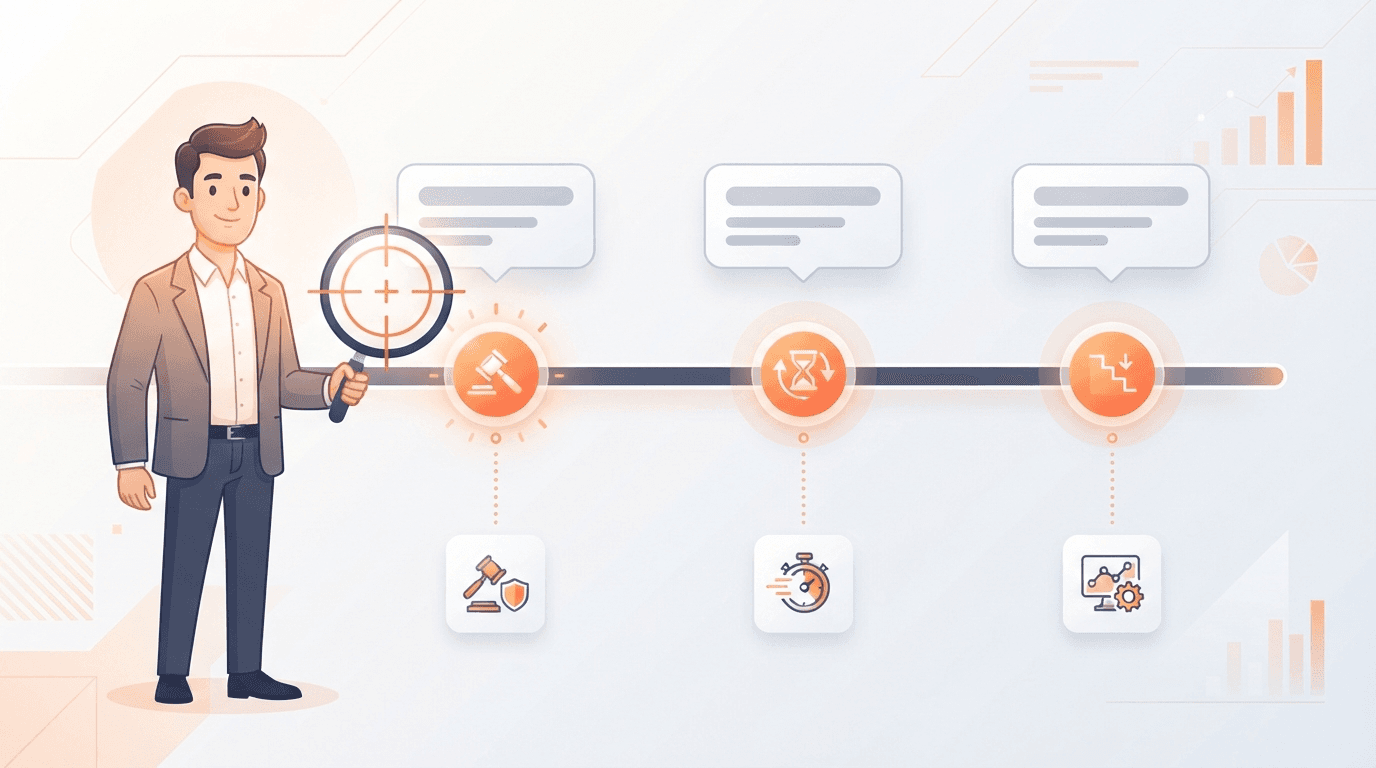
Domain sniping is buying a domain name that its current owner is about to lose — catching it in the narrow window between a missed renewal and somebody else claiming it. That is the whole idea. What almost nobody tells you is that the window is not one moment, it is three, and they happen in different places, against different competition, with different tools. Confuse them and you will buy the wrong service, or sit refreshing an auction tab for a name that was never going to reach an auction at all.
I have been buying and flipping domains for over twenty years, and the definitions floating around online are stuck somewhere in 2004. Some treat sniping as a synonym for drop catching. Some describe it as a threat to be defended against. One well-known encyclopedia entry still frames it as grabbing an expired name to resell to the person who lost it, which is a description of a business almost nobody runs anymore. All of them skip the part that actually decides whether you win.
Here is the version I would give a friend who asked me over coffee.
So what is domain sniping, in one sentence?
Domain sniping is the practice of acquiring a domain the moment its registration lapses or comes up for resale, before the general public gets a shot at it.
It sits between the two obvious ways to get a domain. You can hand-register a brand-new name, which is cheap but means picking through what is left after thirty years of registrations. Or you can approach somebody who already owns the name you want, which works but gets priced accordingly. Sniping is the third door: a large volume of domains falls out of registration every day, a small fraction of them are genuinely good, and for a short stretch those are available at auction prices instead of owner prices.
The word itself is borrowed from eBay, where sniping meant placing a bid in the last second so nobody could respond. That is the single most misleading thing about the term, and I will come back to it, because the tactic the word names does not work on domain auctions at all.
The three moments a domain can be sniped
This is the distinction that clears up most of the confusion. A domain whose owner stops paying for it does not simply appear in a pool one day. It moves through a pipeline, and there are three separate points where you can take it. Each one has its own venue, its own competition, and its own tool.
| The moment | Where it happens | What decides the winner | What you use |
|---|---|---|---|
| 1. The expiring auction Owner missed the renewal; the registrar lists the name while it is still technically theirs. | The registrar’s own marketplace — Namecheap Market, GoDaddy Auctions, Dynadot and the rest. | The highest genuine maximum. Bidding is open, the close is published, and you can see what you are up against. | A discovery and scoring tool, plus your own proxy bid. |
| 2. The deletion race Nobody bought it at auction; the name finishes its grace periods and returns to the public pool. | The registry itself, at the instant of release. Nothing is visible to a human. | Raw speed and connection volume. Specialized services fire thousands of registration attempts in the release millisecond. | A drop-catching service. You are buying somebody else’s infrastructure. |
| 3. The no-bid close An auction ended with zero bids and steps down instead of ending. | The registrar’s closeout lane, running quietly after the main batch. | Being the only person still watching. The price falls until someone takes it. | Patience, or a monitor that keeps a stepping-down name on your list. |
Almost every definition you will find online describes only moment two and calls it the whole practice. Wikipedia’s entry on domain drop catching opens by naming domain sniping as another word for it. That is fair as far as it goes, but it is the moment with the worst odds for an individual buyer and the least room for judgment. You cannot outbid anyone in a deletion race. You either paid the right service or you did not. The clock that leads up to that race, and which parts of it are fixed, is laid out in the domain expiration process, stage by stage, and the five days just before the race are covered in what pending delete means for a buyer.
Moments one and three are where a person with good judgment and decent data can genuinely beat the field, because those moments reward knowing what a name is worth rather than owning faster servers. If you want the long version of how those two compare, I wrote drop catching vs. auctions as a straight side-by-side.
Moment three deserves a note of its own. When Namecheap reworked its auction system in March 2025, no-bid auctions stopped converting into a buy-now closeout and started extending for 24 hours at a reduced $5 minimum, as Domain Name Wire reported at the time, while regular .com auctions had been opening at $15. That is a real lane, and it stays quiet precisely because the people who only understand moment two never look at it. The mechanics of that lane, venue by venue, are in what a closeout domain is.
Why the eBay tactic the word names is dead here
If you take one thing from this page, take this. The last-second bid does not work on domain auctions, and it has not for years.
Namecheap’s official Auctions Bidding Guide is unambiguous: if a bid is placed in the last five minutes of an auction, the auction’s remaining time is extended back to five minutes. Namecheap even names the practice it is stopping, calling it bid sniping and stating plainly that the platform works to prevent it. Every serious auction venue runs some version of that anti-snipe extension.
So a late bid does not steal the name. It restarts the clock and taps the other bidder on the shoulder. If they still have room under their maximum, all you have done is raise the price you are going to pay.
Two more rules from the same guide push in the same direction. A maximum bid cannot be decreased once it is placed, so an inflated number entered in a panic is permanent. And if two bidders enter the identical maximum, the one placed earlier wins. Read those together and the incentive inverts completely: the platform rewards the person who settled on a real number early, not the person who showed up at the buzzer.
That is why every experienced buyer I know does the work upstream. Decide what the name is worth, enter that as your proxy maximum, and let the system pay one increment above the runner-up on your behalf. The increments themselves are published and tiered: a dollar while the price is under $50, three dollars up to $100, five dollars up to $500, and on up from there. If you have never set a maximum with any real method behind it, how to set a maximum bid is the piece to read next, and proxy bidding explained covers the mechanics.
Person, script or app — who does the sniping?
“Domain sniper” gets used for all three, which is another reason the term is muddy. They are not equivalent.
- A person. You watch a name you already care about, you bid on it, you win or you do not. Perfectly viable for one target. It does not scale, because you cannot personally evaluate the volume of names cycling through the aftermarket in a day, and on Namecheap the entire day’s batch is scheduled to close together at 11:00 AM ET. You can meaningfully watch two auctions in that window, not forty.
- A script. There are open-source snipers on GitHub that poll a registrar API and fire a registration when a name frees up. They work, and they are genuinely educational. What you give up is judgment: a script has no opinion about whether a name is worth owning, and none of the guardrails — budget caps, a dry-run mode, a suggested maximum — that stop an automated bidder from overpaying while you sleep.
- An app. The useful version is mostly not a bidder at all. It is a discovery and evaluation engine that runs continuously, filters the day’s inventory against criteria you set, and hands back a short list with comps, backlink data and a defensible number. That is the job that actually decides outcomes.
That last point is the honest summary of the whole practice in 2026. Sniping is now a research problem wearing a shooting metaphor. The timing edge the word promises has been engineered out of the auction; the finding edge is wide open, because most buyers never look past the first page of ending auctions. That gap is what PounceDomains was built for — it watches Namecheap Market around the clock through the official Auctions API, scores every ending-soon match against your configs, enriches it with comps and a suggested maximum, and tells you which handful are worth a bid. If you want to see how the available tools compare, including the free ones, the honest roundup of domain sniping tools is the page for that.
Is domain sniping legal?
Yes, and the question deserves a straight answer rather than a hedge. When a registration lapses, the name goes back into commerce through the registrar’s own channels. Buying it at auction, at closeout, or out of the public pool is an ordinary transaction on inventory the previous owner chose not to renew. Nothing is taken from anybody.
The friction is emotional rather than legal. The person who lost the name usually lost it to an expired card or a dead forwarding address, and they are not happy about it. That is a real thing to sit with, and it is also why registrars send expiration notices and why redemption periods exist: the owner gets repeated chances to reclaim the name before anyone else can touch it.
Where you can genuinely get into trouble is the target list, not the method. Registering a name in bad faith to trade on somebody’s live trademark is cybersquatting, and it can be taken back under the UDRP no matter how cleanly you acquired it. Screening for that takes a couple of minutes per name and it is not optional at any volume — how to run a trademark check before you bid walks through it. The other thing worth avoiding is the naive version of that old encyclopedia definition: buying a name specifically to sell it back to the party who lost it, at a markup, is close to the exact fact pattern a UDRP panel looks for. The wider question of where flipping stays legal is covered in is domain flipping legal.
Where to start if you have never sniped a name
Pick one moment and learn it properly instead of chasing all three. For most people that should be moment one, the expiring auction, because it is transparent, the close is published, and you can watch prices for a few weeks without spending a dollar.
- Understand the venue before you fund it. On Namecheap that means a Market subscription at $5 a year, phone verification, and a $100 minimum account balance before you can place a bid at all, per the official bidding guide. Read how Namecheap Market auctions work first, and the five venues inside the domain aftermarket if you are still working out which lane you are shopping in.
- Watch twenty auctions you do not bid on. Note the opening price, the final price, and how many bidders show up in the last hour. You will learn more about real value in two weeks of that than from any appraisal tool.
- Build a filter, not a wishlist. Length, extension, pattern, age, whether it has any history worth having. Junk is the default state of the drop pool, and finding valuable expired domains is mostly the discipline of throwing things away.
- Set a maximum before the auction, and honor it. The proxy system is built to reward exactly this. Almost everything that goes wrong at auction goes wrong after somebody revises their number upward in the last ten minutes — see the mistakes that cost people money.
- Automate the finding, not the deciding. Once you are buying regularly the bottleneck is coverage, not clicks. That is the point to bring in a tool — you can start free and see what the scan surfaces before you connect anything to your bidding account.
Strip away the metaphor and domain sniping is unglamorous work: knowing which of the three moments a name will pass through, knowing what it is worth before the clock matters, and having the discipline to walk away at your number. The last-second heroics the word promises were engineered out of the auction years ago. The judgment was never automated away, and that is the part still worth getting good at.
Frequently asked questions
Is domain sniping legal?
Yes. Buying an expiring or expired domain through a registrar's auction, closeout, or the public deletion pool is an ordinary transaction on inventory the previous owner chose not to renew. Nothing is taken from anyone. The legal risk is not in the sniping, it is in what you point it at: registering a name in bad faith to exploit somebody else's live trademark is cybersquatting, and it can be reversed under the UDRP no matter how you acquired it. The mechanics are legal; the target list is where you can get yourself in trouble.
What is a domain sniper?
Two different things, depending on who is speaking. It can mean a person who buys expiring domains for resale, and it can mean software that watches auctions and expiring names on their behalf. The software sense is the useful one, and the word oversells it. A modern domain sniper is mostly a discovery and evaluation engine: it monitors auction inventory continuously, filters it against criteria you set, scores what is left, and surfaces the handful of names worth your attention with comps and a suggested maximum. Placing the bid is the smallest part of what it does.
Does last-second bidding work on domain auctions?
Not on the platforms that matter. Namecheap's Auctions Bidding Guide states that if a bid is placed in the last five minutes of an auction, the remaining time is extended back to five minutes, and Namecheap names the practice it is preventing as bid sniping. Every major domain auction venue runs some version of that anti-snipe extension. A late bid does not steal the auction, it just restarts the clock and tells the other bidder to raise. What wins instead is a disciplined maximum entered early, because a proxy bid only pays one increment above the runner-up.
Is domain sniping the same as drop catching?
They overlap but they are not the same, and most definitions online collapse them. Drop catching is one specific moment: the millisecond a name completes deletion and returns to the public registration pool, when specialized services race thousands of connection attempts to grab it. Sniping is the broader practice of acquiring a name its owner is about to lose, which also covers the marketplace auction that runs before the drop and the quiet closeout that follows an auction nobody bid on. Drop catching is a speed contest you pay someone else to enter; the auction lanes are transparent bidding you enter yourself.
Do you need software to snipe domains?
Not to buy one name you already know about. If you have a specific target, set a watchlist reminder and bid it yourself. Software earns its keep on the discovery problem, which is the part that does not scale by hand: thousands of names cycle through the aftermarket every day, the good ones are buried under junk, and on Namecheap the whole day's batch is scheduled to close together at 11:00 AM ET, so you cannot sit on more than a couple of auctions at once. A tool that scans continuously and scores everything is solving the finding problem, not the clicking problem.
Mark Fulton
Developer & Founder of PounceDomains · 20+ year domain investor
Mark Fulton is a 20+ year domain investor and the developer and founder of PounceDomains. He has spent two decades buying, building, and flipping domain names, and built PounceDomains himself to automate the hunt for undervalued domains on the Namecheap aftermarket.
Keep reading
Is Domain Flipping Legal? Yes, Here's the Line to Avoid
Buying and reselling domains is legal. The risk is cybersquatting: names aimed at someone's trademark. Here is the line, the two enforcement routes and a risk scorecard.
Exact Match Domains in 2026: Dead Ranking Trick, Live Resale Asset
What an exact match domain is, what Google's 2012 EMD update changed, why end users still pay for the right ones, and how to tell an asset from a liability.
Snipe these domains automatically
PounceDomains watches Namecheap Market 24/7, scores every ending-soon domain with AI, and bids on the winners. Free to start.
Start sniping free