
DomCop Alternatives: Free and Cheaper Tools by Job (2026)
The best DomCop alternatives for 2026, free and paid, matched to the job you hired DomCop for. Real prices from $816 a year, and when switching makes no sense.
 Mark FultonAug 10, 12:00 AM UTC9 min read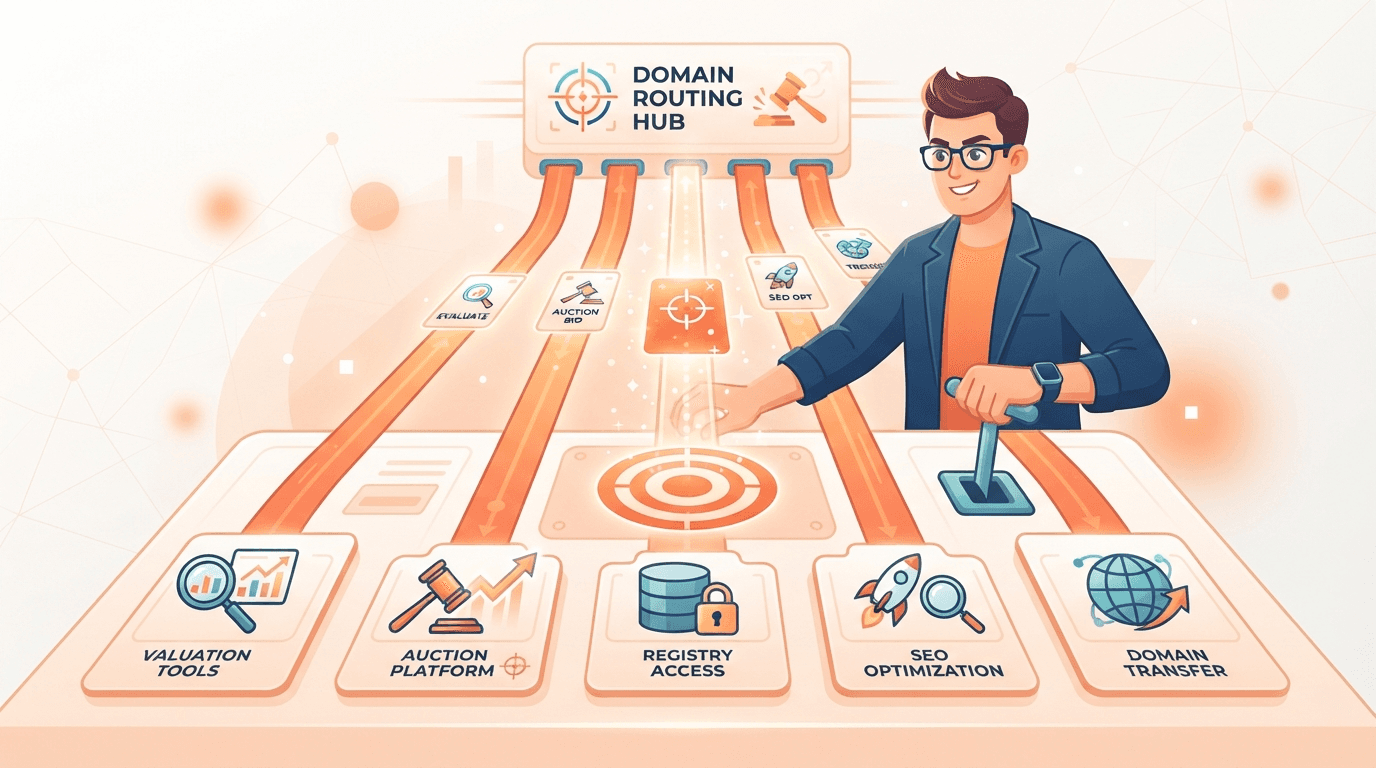
The reason every “DomCop alternative” list feels useless is that they all answer the wrong question. They rank tools as if DomCop were one product with cheaper clones, when it is really a bundle of three separate jobs — aggregating expiring domains into one place, grading them on licensed SEO metrics, and letting you filter the result — and most people searching this term only want one of the three. If you want the same job cheaper, the answer is an aggregator. If you want a different job entirely, which is what most resale-focused investors actually want, no amount of SEO metrics will get you there and swapping DomCop for a lookalike just moves the same mismatch to a smaller invoice. After 20+ years of buying names, the mismatch is the expensive part, not the subscription.
Here is what you get if you search the term today: two directory sites that list similar-looking domains with no editorial view at all, a vote-ranked software directory whose entries are product descriptions rather than comparisons, a generic listicle, an old forum thread, and two vendor pages from competing tools explaining that they are the better choice. Not one of them tells you what DomCop is genuinely good at, what it costs this year, or how to tell whether you should be using a tool like it in the first place. This piece does those three things, and it concedes up front that for one specific kind of buyer DomCop is the right answer and I would not talk them out of it.
What is DomCop actually good at?
DomCop is an aggregation and metrics layer for expired domains. It pulls expiring, expired, and dropped names into a single searchable database and decorates each one with data it licenses from the major SEO providers — its own site names Majestic, Moz, Estibot, Alexa, and SEMrush, and advertises 90+ metrics in total. The auction feeds it points at, as of August 2026, are GoDaddy Auctions, NameJet pre-release, and Dynadot auctions. You then filter millions of names down to a shortlist by whatever thresholds you care about.
That is a genuinely hard engineering job and DomCop does it well. If your buying thesis is link equity — you want an aged domain with a clean backlink profile and real historic authority, and you intend to rebuild or redirect it — then a dense filter set over licensed metrics is exactly the tool for the work, and I have never seen a free alternative match its depth on that specific axis. Anyone telling you DomCop is bad is selling you something.
The metrics themselves are worth understanding rather than treating as a score. Majestic’s Flow Metrics, for instance, are two separate numbers: Majestic’s own glossary defines Citation Flow as a 0–100 measure of link volume or “power,” and Trust Flow as a 0–100 measure of link quality derived from manually reviewed trusted seed sites. A domain with high Citation Flow and near-zero Trust Flow is not a bargain; it is a spam profile with a lot of links. Reading that pair correctly is the skill, and it is the same skill whichever tool displays it — which is the first hint that switching vendors rarely changes your results.
Why is “what’s the best alternative” the wrong question?
Because three completely different frustrations send people to that search, and they have three different answers.
Frustration one: the price. DomCop’s published pricing, checked in August 2026, runs $816 a year for Newbie, $1,152 for Power, and $1,416 for Guru, with crawler-heavy tiers at $2,832 and $4,272. If that is the problem, you want a cheaper tool doing the same job, and cheaper options genuinely exist.
Frustration two: the output. You run the filters, you get a list, and then you sit there unsure which of 300 names is worth money. That is not a price problem and a cheaper aggregator will reproduce it exactly. The metrics answered a question you did not ask.
Frustration three: the ending. You find a name you want, and the tool’s job is finished at the moment yours starts. Nothing watches the auction, nothing tells you what to bid, and nothing stops the close from happening while you are asleep. That is a workflow gap, not a data gap.
Only the first of those is solved by an alternative in the ordinary sense. The other two are solved by a different category of tool, and that is why the directory listings do not help — they sort by surface similarity, which is precisely the axis that does not matter.
Which tool should you use for which job?
This is the table I wish the alternatives lists had. Find your row by what you are actually trying to do, not by what DomCop happens to have on its feature page. Prices move constantly in this category, so treat every figure as August 2026 and confirm on the vendor’s own page.
| The job you are hiring a tool for | What actually fits | Why DomCop is or isn’t it |
|---|---|---|
| Buy aged domains for their backlink profiles, at volume | DomCop, or Spamzilla for a cheaper spam-focused cut | This is DomCop’s home turf — stay unless the price genuinely does not clear |
| Same job, smaller budget, willing to do more work yourself | ExpiredDomains.net’s free tier | Comparable raw coverage; you trade polish and pre-processing for the four-figure fee |
| Judge whether a name reads as a brand someone would buy | Your own judgment, or AI scoring against a rubric | No SEO metric measures this — wrong category entirely, at any price |
| Put a defensible number on a name before bidding | Comparable sales, backed up by an appraisal tool | DomCop surfaces an Estibot figure; a number without comps is not a price |
| Be told about a live auction in time to actually bid on it | A monitoring and bidding layer on your chosen venue | Research tools end at the list; the clock is somebody else’s problem |
| Win a heavily contested name the second it deletes | A drop-catch network | Different mechanism — a registry race, not a marketplace bid |
Three of those six rows are not alternatives to DomCop at all. They are the stages a research tool was never built to cover, and if your frustration lives in one of them, the correct move is to keep whatever aggregator you like and add a layer, not to churn sideways. The wider map of that category is in the domain sniping tools roundup, and the drop-catch lane specifically is covered in best domain drop catching service.
Do SEO metrics predict what a domain resells for?
Barely, and this is the single most expensive misunderstanding in the expired-domain world. Trust Flow, Citation Flow, and Domain Authority are models of a link graph. They tell you how a search engine might have treated the domain’s history. They say nothing about whether a real company would pay four figures to be called that, because a company’s buying decision is about the name, not the backlinks pointing at a site that no longer exists.
The two buyer types genuinely want opposite things. An SEO buyer wants an aged domain with authority and does not care that it is called midwest-hvac-repair-blog.net. An end-user buyer wants a name that is short, sayable, and ownable, and does not care that it has zero backlinks — plenty of the best brandables were parked their whole lives. Run a filter tuned for the first buyer and you will systematically surface names the second buyer will never want.
There is a compliance angle too, and it is worth knowing before you build a business on link equity. Google’s own spam policies name expired domain abuse explicitly — buying an expired domain primarily to manipulate search rankings by hosting low-value content on it — and list it alongside link spam. That does not make buying expired domains wrong; it makes the resale thesis structurally more durable than the rankings thesis, because nobody can deprecate a good name. It is also why I read a domain’s past through the Wayback Machine and a proper backlink audit as risk screening rather than as a buy signal.
Should you switch, downgrade, or add a layer?
Three questions, in order. Answer them honestly and the decision makes itself.
1. In the last six months, did a DomCop metric stop you from buying something, or push you to buy something you would otherwise have skipped? If yes, the data is earning its fee and you should stay. If you cannot name a single instance, you are paying four figures a year for a dashboard you glance at, and the plan should come down or go.
2. What does your shortlist look like after the filters run? If it is a clean twenty names you can research properly, the tool is working. If it is 300 names and you pick the ones you had time to look at, your bottleneck is judgment at volume, and more metrics will make that worse rather than better. That is the problem AI scoring exists for — a consistent rubric applied to every candidate instead of your attention applied to the first few.
3. How many names did you find but not bid on? Count them. This is the number that shocks people. If names you had already identified closed without you, no research tool on earth fixes that, because the failure happened after research ended. You need something watching the venue on a clock.
Most people I ask land on question three, and it is the one no alternatives list even mentions.
What if you buy on the Namecheap Market?
Then the coverage question comes first, before any feature comparison. A tool cannot filter, score, or alert you on a venue it does not ingest, and the Namecheap aftermarket is not among the auction sources DomCop lists. If that is where you buy, the depth of the metric stack is irrelevant — the names are simply not in the database.
That venue also has mechanics a watcher has to respect. Namecheap’s Auctions Bidding Guide sets out a Market subscription at $5 per year, a $100 minimum account balance to bid at all (rising to $1,000 in funds for bids of $10,000 or more), a five-minute extension whenever a bid lands in an auction’s final five minutes, payment due within 72 hours of the close, and the rule that catches people out most: you may never decrease a maximum bid once it is placed. Those constraints are why the number belongs in a max-bid worksheet written before the clock starts, and why the daily batch close makes timing a real problem rather than a preference. The full mechanics are in Namecheap Market auctions explained.
I will be plain about my own position here, because a comparison piece that ends in a pitch has earned your skepticism. PounceDomains is not a DomCop replacement and I would not sell it as one. It is single-venue by design — the Namecheap Market only, not GoDaddy, not NameJet, not the wider drop market — and it carries nothing like 90+ SEO metrics, because it grades names for brandability and resale rather than link equity. What it does instead is the part that ends at a list everywhere else: it watches that market around the clock, scores and enriches every ending-soon candidate against configs you write yourself, flags the drops closing with no bids, and hands you a conservative resale range and a suggested maximum while the name is still biddable. If you buy for backlinks across every major auction house, DomCop is a better fit than anything I have built, and you should use it.
What does a sensible stack look like?
Assign each tool a job and refuse to pay twice for the same one. Three working shapes:
SEO and PBN buyer. Keep DomCop or a comparable metrics aggregator as the core, add the free tier of a second aggregator to catch inventory your primary misses, and spend your remaining budget on verification rather than another dashboard. Your risk is a poisoned history, so the money is best spent there.
Resale and brandable buyer. The metric stack is mostly wasted on you. Filter mechanically on the cheap tier or the free aggregator, judge the survivors on whether the name reads as a business, and put your budget into pricing — three to five real comparable sales beat any automated appraisal, and the discipline behind that filter is in how to find valuable expired domains.
Either one, if names keep closing without you. Add a monitoring layer on the venue you actually buy from and stop treating the shortlist as the finish line. That is the gap I built PounceDomains to close on the Namecheap aftermarket, and you can start a free account and have a config running in a couple of minutes.
Whatever you choose, do the routing exercise before you compare a single feature list. Write down the job, then the tool that covers it. The people who churn between research tools every year are almost always buying the same job over and over while the gap sits somewhere else entirely.
Frequently asked questions
What is the best DomCop alternative?
It depends entirely on which job you were hiring DomCop to do, and that is the question every alternatives list skips. DomCop is an aggregation-and-SEO-metrics tool: it pulls expiring and dropped domains from auction sources into one dashboard and grades them on backlink and traffic data licensed from Majestic, Moz, Estibot, and SEMrush. If you want that same job for less money, ExpiredDomains.net is the free aggregator most investors start with, and Spamzilla is the cheaper option with pre-analyzed spam and backlink data. If you want the job done differently — judging names on brandability and resale value rather than link equity — then no SEO-metrics tool is the answer at any price, because the 90+ metrics DomCop advertises are all measuring something you do not care about. And if you want the tool to actually act on a live auction rather than hand you a spreadsheet, you are looking for a bidding layer, which is a third category again. Name the job first; the shortlist falls out of it.
Is DomCop worth the price?
It is worth it for a specific buyer and expensive for everyone else, and the price makes that a sharper question than most reviews admit. DomCop's own pricing page, checked in August 2026, starts at $816 a year for the Newbie plan and runs to $1,152 for Power and $1,416 for Guru, with the top crawler tiers at $2,832 and $4,272 a year. That is a serious annual commitment, and it only pays for itself if the data you are buying changes decisions you would otherwise get wrong. For someone buying expired domains for their link profiles at volume, it plausibly does: one avoided purchase of a burned domain covers a chunk of the subscription. For someone buying two or three brandable names a year to resell, it is hard to justify — you are paying four figures annually for metrics that do not predict whether a name will sell to an end user. Work out how many buying decisions a year you make, and what a better decision is worth, before you look at the plans.
Is there a free alternative to DomCop?
Yes, and for the aggregation half of the job it is genuinely good. ExpiredDomains.net has run a free tier for years that lists expired, expiring, and auction domains with a deep filter set, and it is where a large share of working investors actually start their search. What you give up is polish and pre-processing rather than raw coverage: the interface is dense, some of the richest metrics sit behind the paid tiers, and you do your own crawling and verification. The other free layer worth knowing is direct — most auction venues publish their own inventory, so you can watch a single marketplace at its source without paying anyone. Free tools cost you time instead of money, which is the right trade while you are still learning what a good candidate looks like, and the wrong one once your bottleneck is attention rather than budget.
Does DomCop cover Namecheap Market auctions?
Not as one of its headline auction sources. As of August 2026 the auction feeds DomCop points at on its own site are GoDaddy Auctions, NameJet pre-release, and Dynadot auctions — the Namecheap aftermarket is not among them. That is a reasonable product decision rather than an oversight: DomCop's audience buys for link equity, and the venue with the deepest inventory of aged, backlinked domains is GoDaddy. But it matters if the Namecheap Market is where you buy, because a tool that does not ingest a venue cannot filter, score, or alert you on it. Namecheap's own aftermarket runs a documented set of rules that any tool watching it has to respect — a $5-a-year Market subscription, a minimum account balance to bid, a five-minute extension on late bids, and a daily batch close — and coverage of those mechanics is either present in your tool or it is not.
Is DomCop good for finding domains to flip?
It is good at finding domains and weak at telling you which will flip, and separating those two things saves you a lot of money. The filters work: you can cut millions of expiring names down to a few hundred by age, extension, length, and metric thresholds in seconds, and that mechanical narrowing is real value. What the metric stack cannot tell you is whether a name reads as a brand, whether a human can say it back after hearing it once, or which of two similar candidates an end user would actually pay for — because Trust Flow and Domain Authority were built to describe link profiles, not resale demand. So the honest workflow for a reseller is to use an aggregator for the mechanical cut, then apply judgment on the survivors, then price the shortlist against real comparable sales. The expensive mistake is treating a high SEO score as a buy signal for a name you intend to resell to a business.
Mark Fulton
Developer & Founder of PounceDomains · 20+ year domain investor
Mark Fulton is a 20+ year domain investor and the developer and founder of PounceDomains. He has spent two decades buying, building, and flipping domain names, and built PounceDomains himself to automate the hunt for undervalued domains on the Namecheap aftermarket.
Keep reading
GoDaddy Auctions Alternative: Where Else to Buy Drops
GoDaddy has the most inventory, and that is not the only thing that matters. A venue-by-venue guide to buying expiring domains elsewhere, keyed to what you hunt.
Karma.Domains Alternative: What the Score Can't See
Looking for a Karma.Domains alternative? A 20-year investor on what the Karma Score really measures, what it can't, and the auction clock no history tool watches.
Snipe these domains automatically
PounceDomains watches Namecheap Market 24/7, scores every ending-soon domain with AI, and bids on the winners. Free to start.
Start sniping free